Aluminum Surface Finishing Services
We provide high-quality aluminum surface finishing services including anodizing, polishing, and coating to improve durability, corrosion resistance, and appearance for industrial applications.
What Finishing can be done on Aluminum CNC Machining Parts?
Polishing
There are several methods to achieve a glossy surface on aluminum. A common approach is to anodize the machined parts first, followed by polishing to refine the surface roughness and improve appearance.
Advantages:
Cost-effective solution with relatively low processing cost.
Disadvantages:
- Requires high-quality raw machined surfaces; rough textures will still appear after polishing.
- Polishing may slightly affect dimensional accuracy, making it unsuitable for parts with very tight tolerances.
High-Gloss Mirror Finishing
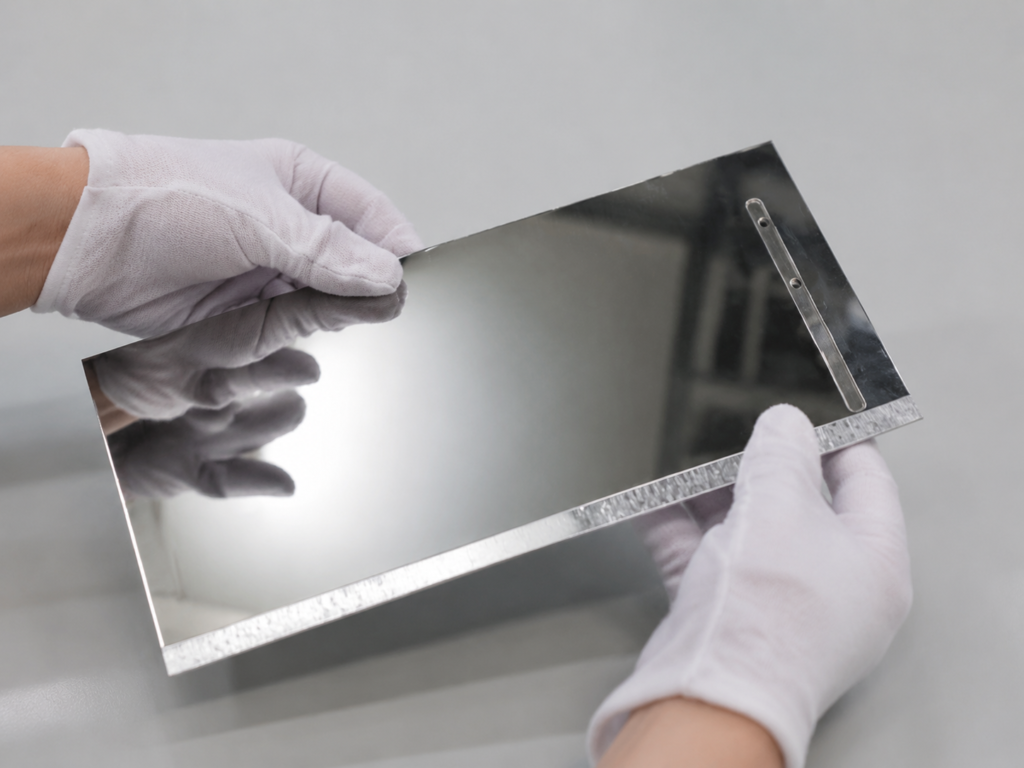
Mirror finishing is a premium surface treatment process that produces an ultra-smooth, highly reflective aluminum surface, delivering a luxurious, mirror-like appearance widely used in high-end decorative and consumer applications.
Disadvantages:
- The overall processing cost is relatively high, as it requires multiple precise polishing and finishing steps.
- The surface is very sensitive to damage; even minor scratches, fingerprints, or impacts during handling and transport can permanently affect the appearance and reduce the visual quality of the part.
Chrome Plating Finish
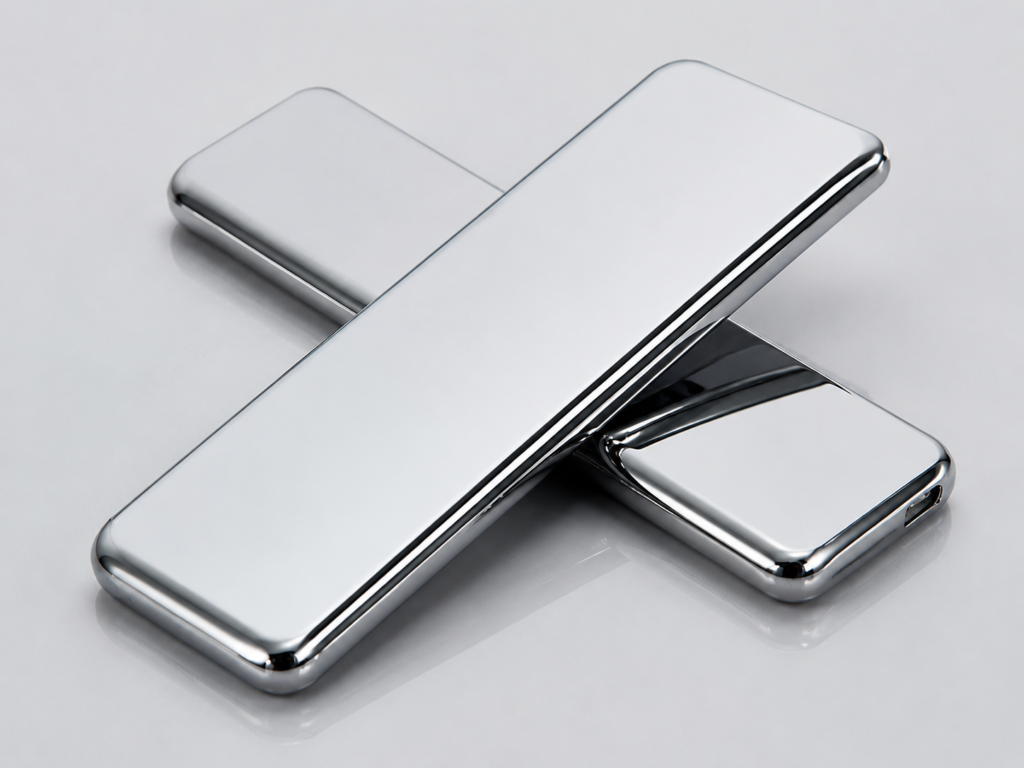
Chrome plating on aluminum creates a high-gloss, mirror-like surface similar to polished finishes, but with an additional electroplated protective layer that enhances durability. This coating significantly improves wear resistance, allowing normal hand contact and daily handling without affecting the surface quality. Only hard impacts or abrasive contact may cause visible damage.
Advantages:
Delivers a premium mirror effect while providing excellent wear and scratch resistance compared to standard polishing.
Disadvantages:
The process cost is higher than direct anodizing or mirror polishing, and it requires strict material preparation and surface quality before electroplating.
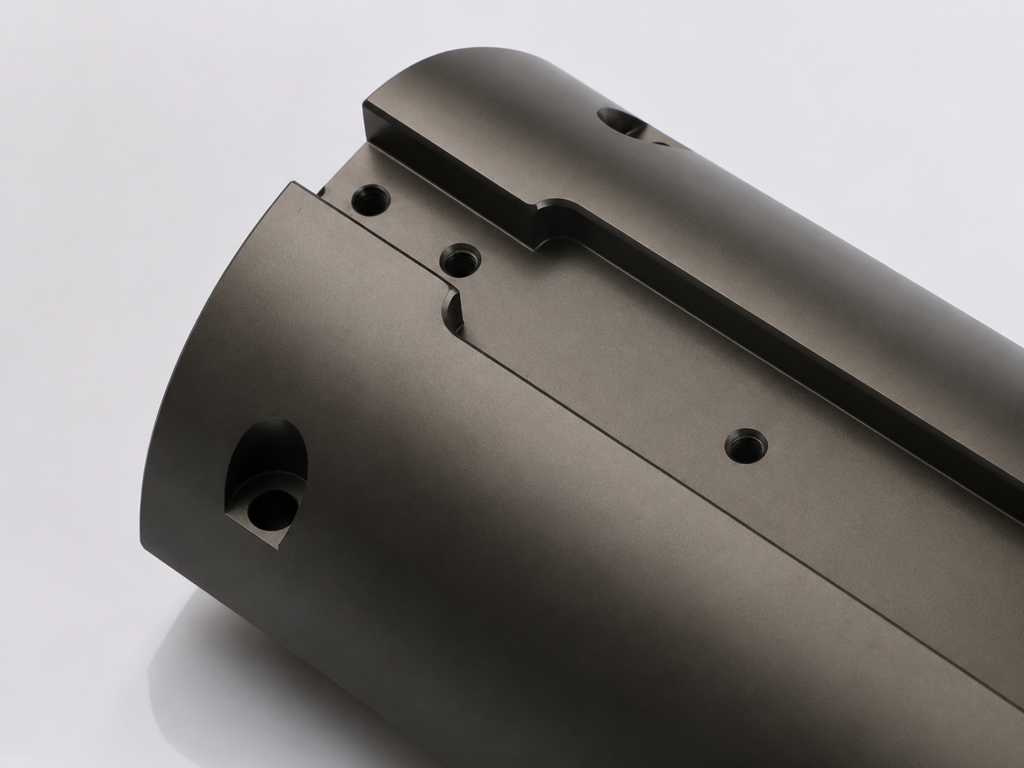
Hard Anodizing
Anodizing for aluminum generally falls into two types: standard anodizing and hard anodizing. The main difference lies in the coating thickness. Standard anodizing typically has a layer below 10μm, while hard anodizing is usually above 20μm. A thicker coating provides significantly better wear resistance, but also increases processing cost.
Standard anodizing is a cost-effective solution mainly used for corrosion protection, but its wear resistance is relatively limited. Hard anodizing, on the other hand, is chosen when higher durability and surface strength are required, though it comes at a higher cost.
Visually, both finishes are almost identical to the naked eye. The difference can only be identified through professional tools such as a coating thickness gauge. A simple 2B pencil scratch test can also help distinguish between standard and hard anodizing.
Aluminum Material Properties Overview
Comprehensive technical data for aluminum alloys used in precision manufacturing
| Material | Elastic Modulus (GPa) | Tensile Strength (MPa) | Yield Strength (MPa) | Key Attributes | Typical Applications |
|---|---|---|---|---|---|
| Aluminum 1050 | – | 95 – 125 | 75 | Malleability, corrosion resistance, weldability, high conductivity | Chemical instruments, sheet metal parts, heat exchangers, kitchen utensils |
| Aluminum 1060 | 69 | 110 – 136 | 35 | Excellent formability, corrosion resistance, conductivity | Battery components, lighting, electronics, decorative parts |
| Aluminum 2024-T3/T4 | 72.4 | 470 – 485 | 325 – 345 | High strength, fatigue resistance, aerospace grade | Aerospace structures, military components, precision molds |
| Aluminum 5052-H32 | 70 | 230 | 195 | Corrosion resistance, weldability, medium strength | Marine parts, automotive panels, electrical enclosures |
| Aluminum 5083 | – | 275 – 350 | 210 | Excellent corrosion resistance, weldability, marine grade | Shipbuilding, pressure vessels, transportation equipment |
| Aluminum 6061-T6 | 69 | 310 | 275 | Machinability, anodizing compatibility, structural strength | Machined parts, automotive, electronics, molds |
| Aluminum 6063-T5/T6 | 69 | 185 | 145 | Extrusion performance, corrosion resistance | Profiles, frames, construction systems, furniture |
| Aluminum 7075-T6 | 72 | 570 | 505 | Ultra-high strength, wear resistance, aerospace grade | Aerospace parts, gears, shafts, high-load fixtures |
| MIC-6 | 71 | 166 | 105 | High flatness, stability, precision machining grade | Precision plates, molds, fixtures, optical components |
CNC Machining Design Guide
Essential Design Tips for Engineers & Buyers to Ensure Quality Machined Parts
- Design for Manufacturability (DFM)
- Tolerance & Dimensional Control
- Surface Finish Selection
- Common Design Pitfalls to Avoid
- Material & Process Optimization
- Cost & Production Efficiency Consideration