Insert Molding Manufacturer
We are a professional insert molding manufacturer providing high-precision, cost-effective solutions for metal and plastic integrated components, supporting prototyping to mass production with consistent quality and reliable engineering support.
Insert Molding Services
Insert molding is a highly specialized injection molding process in which pre-formed inserts—most commonly metal components—are precisely placed into the mold cavity before molten plastic is injected. Once the plastic flows and solidifies around the insert, it becomes permanently encapsulated within the molded part, forming a strong and integrated structure.
As a professional manufacturer, we leverage insert molding to deliver highly reliable, cost-efficient, and structurally enhanced components. This single-shot process eliminates the need for secondary assembly operations, reducing production time, labor costs, and potential assembly errors. The result is a durable, precision-engineered part that combines the strength of metal with the flexibility of polymers, widely used in automotive, electronics, and industrial applications.
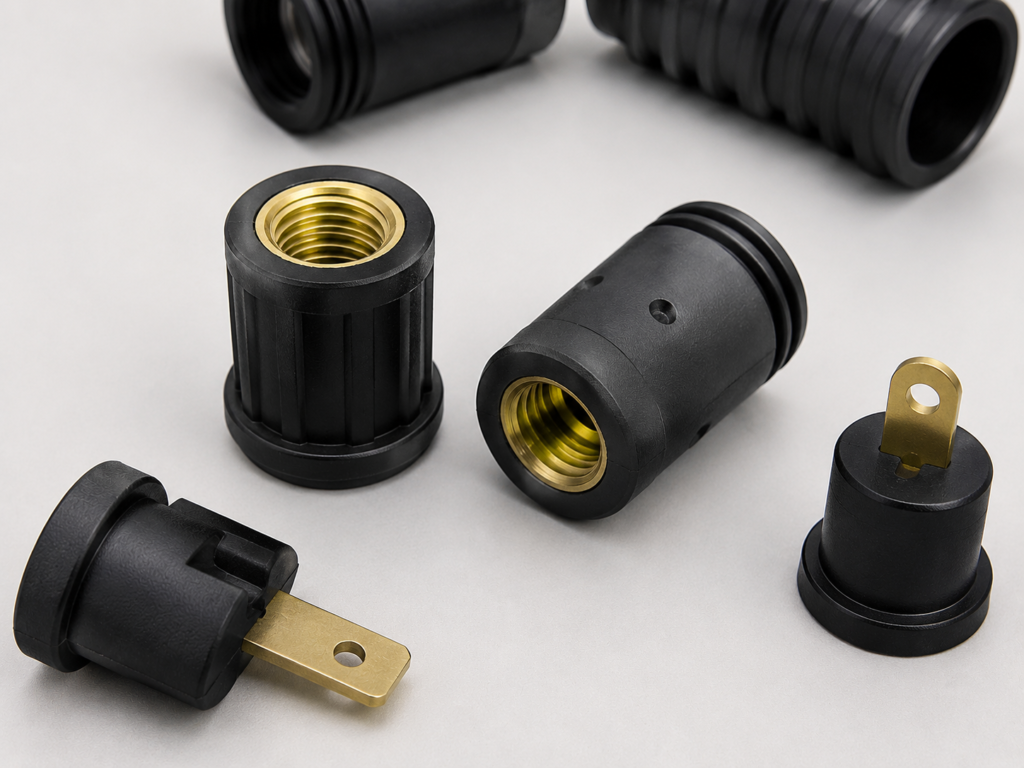
Types of Insert Molding Processes
Get custom plastic prototypes and production parts with flexible and cost-effective solutions from Junvor. We support rapid prototyping and scalable manufacturing to help you move efficiently from concept to production with consistent quality and fast turnaround.
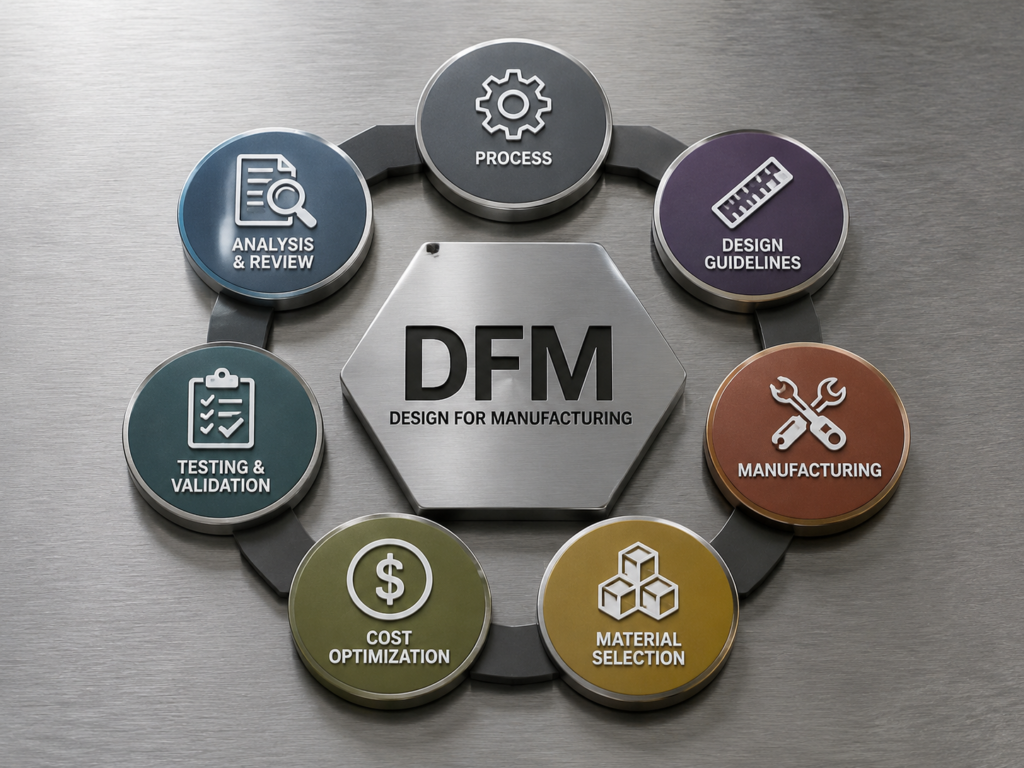
Design for Manufacturability (DFM) Optimization
Junvor provides DFM analysis to improve part manufacturability early in development. We help identify design risks, reduce production costs, shorten cycle time, and improve overall injection molding efficiency and product stability.
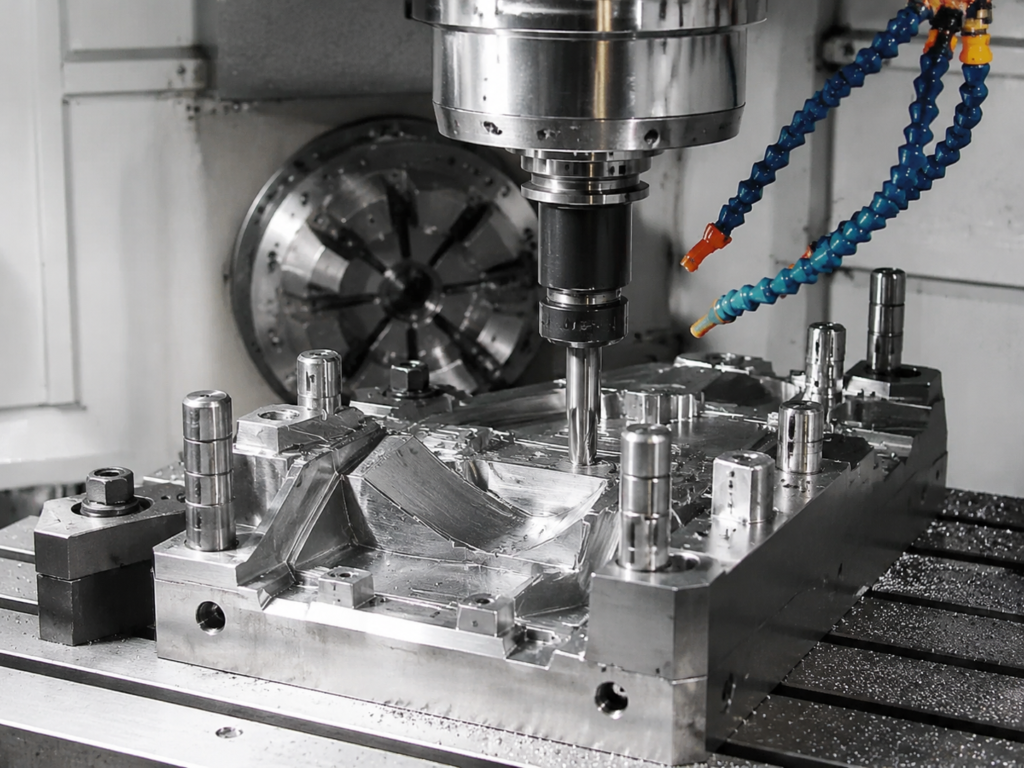
Precision Mold Engineering & Manufacturing
We design and manufacture high-precision injection molds tailored to complex product requirements. Our engineering ensures dimensional accuracy, long mold life, and consistent production quality for both prototype and mass production tooling.
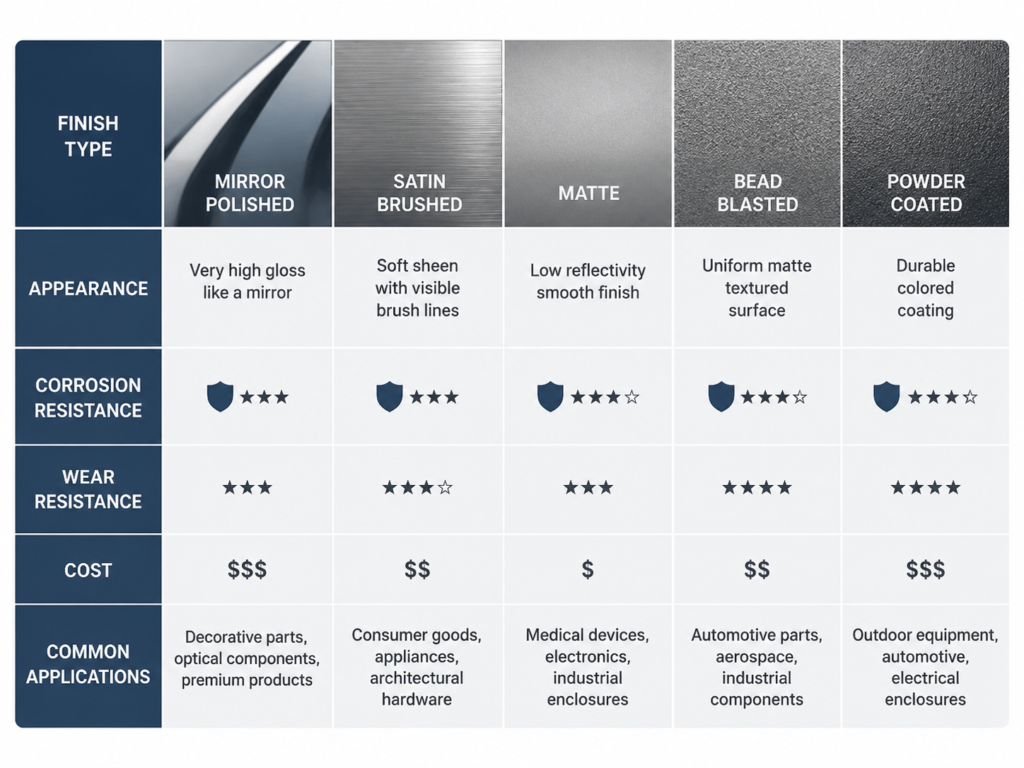
Mold Surface Finishing Solutions
Junvor offers advanced mold surface treatments including polishing, texturing, and protective coatings. These processes improve part appearance, enhance mold release performance, and extend overall tool lifespan.
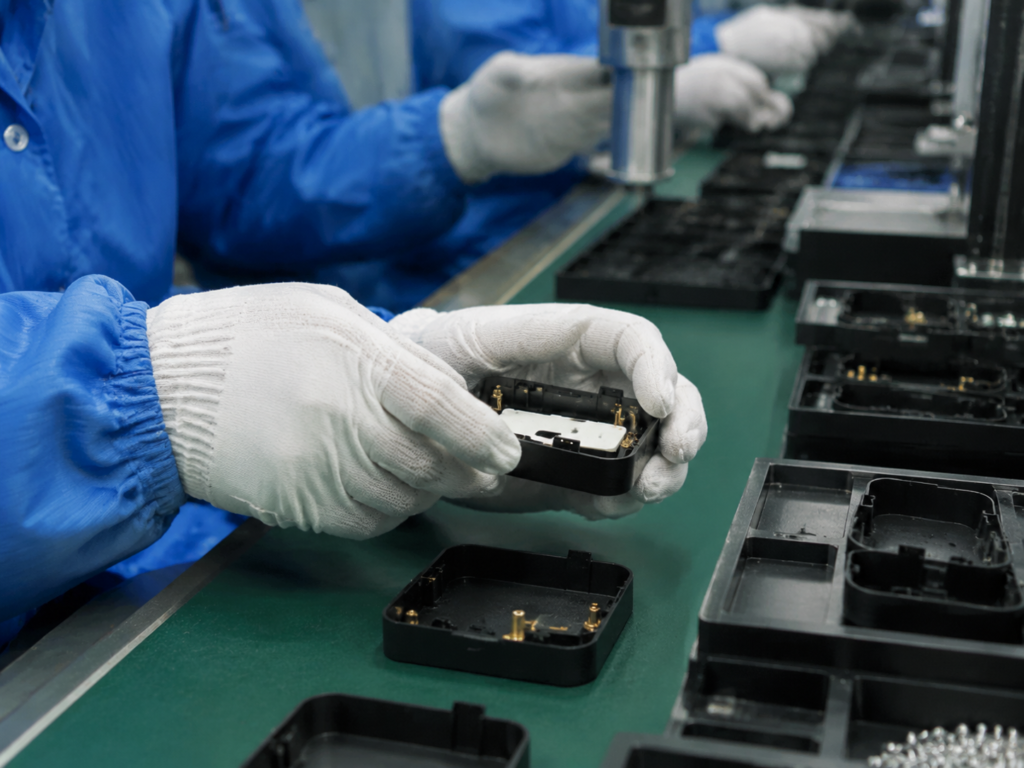
Automated & Manual Assembly Services
We provide flexible assembly solutions including automated and manual processes to support efficient production workflows. Our assembly services ensure consistent product integration, reduced labor complexity, and improved manufacturing efficiency.
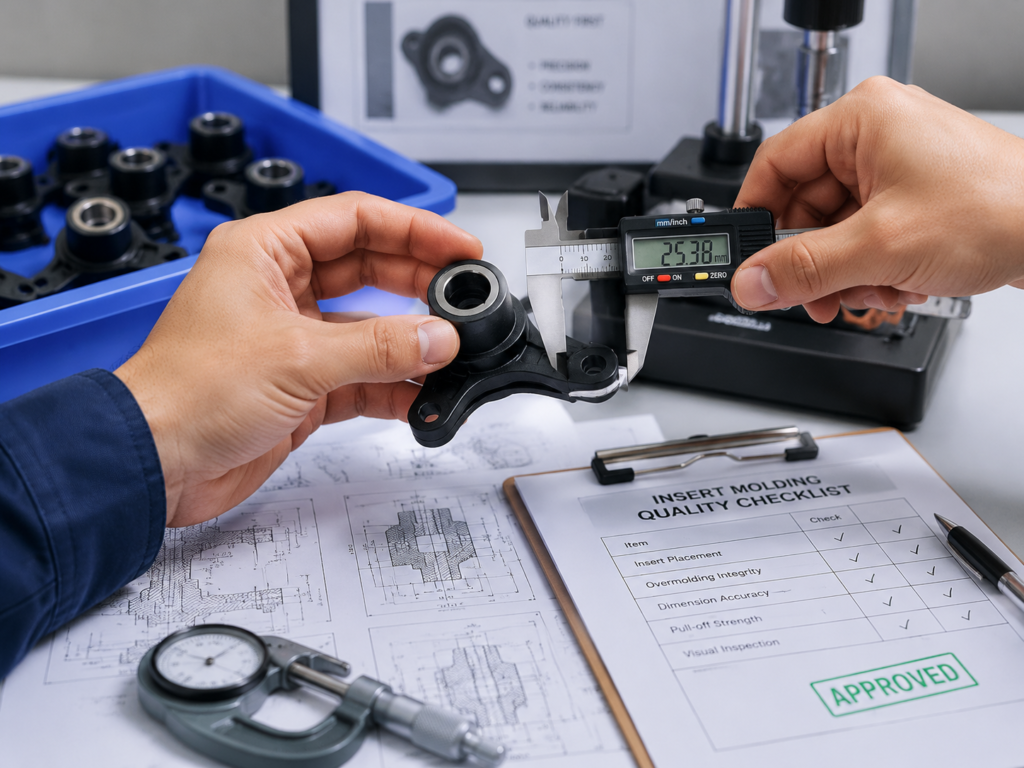
Quality Assurance & Inspection Management
Our strict quality control system ensures every part meets engineering and customer specifications. Using precision measurement tools and standardized inspection processes, we deliver reliable, defect-free components for all production stages.
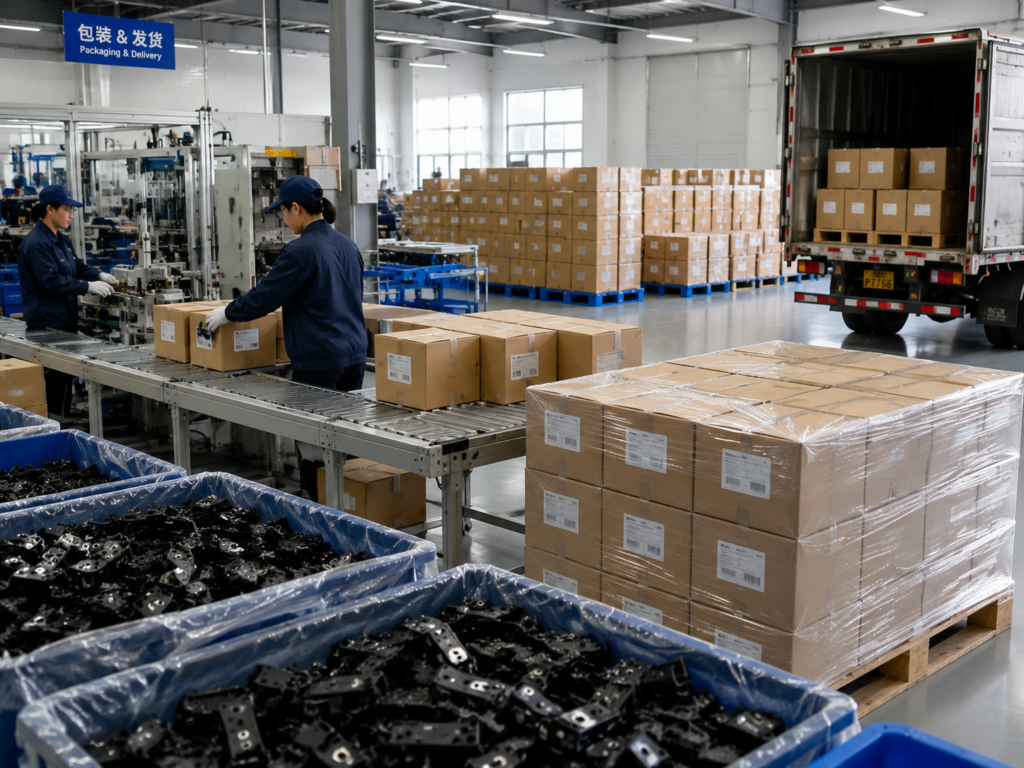
Secure Packaging & Global Delivery
Junvor provides professional packaging solutions designed to protect parts during transportation. We offer flexible global shipping options to ensure safe, timely, and cost-efficient delivery for all injection molded products.
Insert Molding Design Guidelines
Our design guidelines for overmolding and insert molding are developed to enhance manufacturability, improve cosmetic quality, and reduce overall production time. These specifications help ensure optimal part performance while maintaining cost efficiency in mass production. For more detailed engineering requirements, please refer to our dedicated design guideline resources.
| Specification | US Units | Metric Units |
|---|---|---|
| Maximum Part Size | 18.9 in. × 29.6 in. × 8 in. | 480 mm × 751.8 mm × 203.2 mm |
| Maximum Volume | 59 cu. in. | 966,837 cu. mm |
| Maximum Depth |
4 in. from parting line Up to 8 in. if parting line passes through center |
101 mm from parting line Up to 203.2 mm if parting line passes through center |
| Projected Mold Area (Plastic) | 175 sq. in. | 112,903 sq. mm |
| Projected Mold Area (Silicone Rubber) | 48 sq. in. | 30,958 sq. mm |
Insert Molding Capabilities
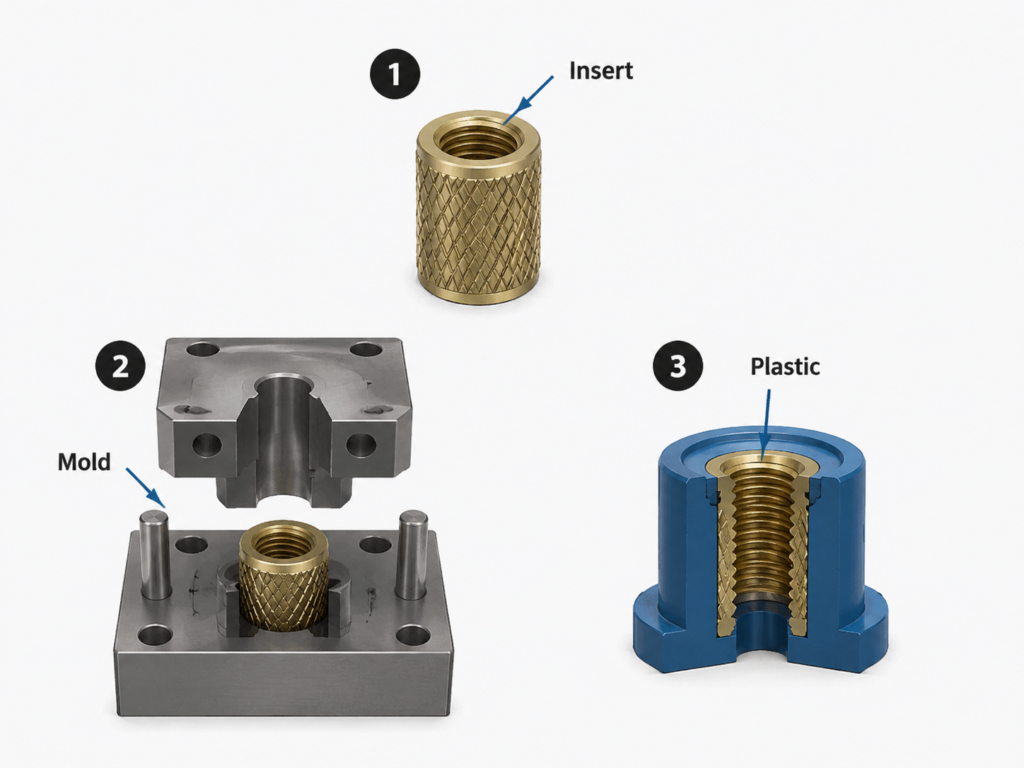
Insert molding is a manufacturing process where a preformed component—typically a metal insert—is placed into a mold and then encapsulated with injected plastic. Unlike overmolding, it is completed in a single molding cycle, helping improve structural strength and overall part performance while maintaining efficient production.
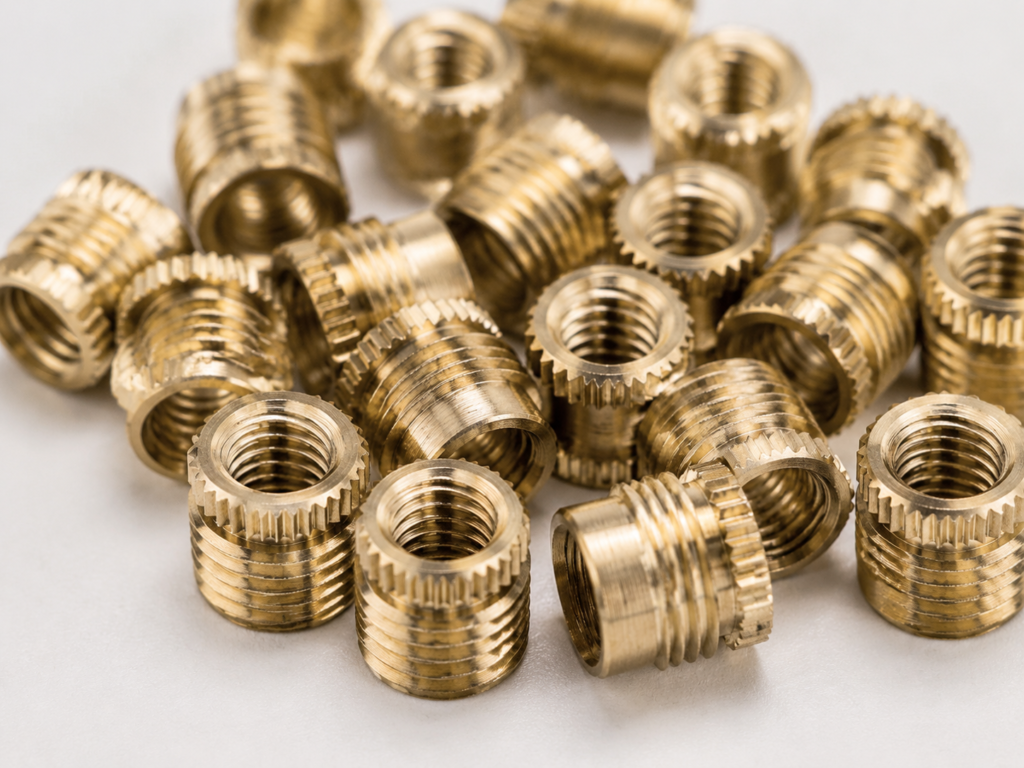
We work with high-quality inserts from trusted suppliers such as PEM, Dodge, Tri-Star, Spirol, and Tappex to ensure consistent reliability across applications. This process is commonly used for threaded inserts to reinforce fastening strength in plastic parts, especially in assemblies requiring repeated disassembly. It is also ideal for bushings and sleeves, where improved wear resistance and durability are needed for moving or mating components.
Key Advantages of Insert Injection Molding
Improved Strength
Metal or rigid inserts increase load capacity and durability in high-stress areas.
No Secondary Assembly
Eliminates screws, adhesives, and post-processing like tapping or welding, reducing cost and time.
Compact Design
Enables integration of functional elements into small, precise components.
Higher Reliability
Creates a strong bond between insert and plastic, reducing failure points.
Ready to get started on your custom insert molding quote?
Whether your project requires engineering support, tool design assistance, or insert molding production, Junvor provides a complete team to support you from concept to final manufacturing. Contact us today for a free instant quote and expert guidance on your custom injection molding project.
Knurl Design: Preventing Pull-Out and Torque-Out
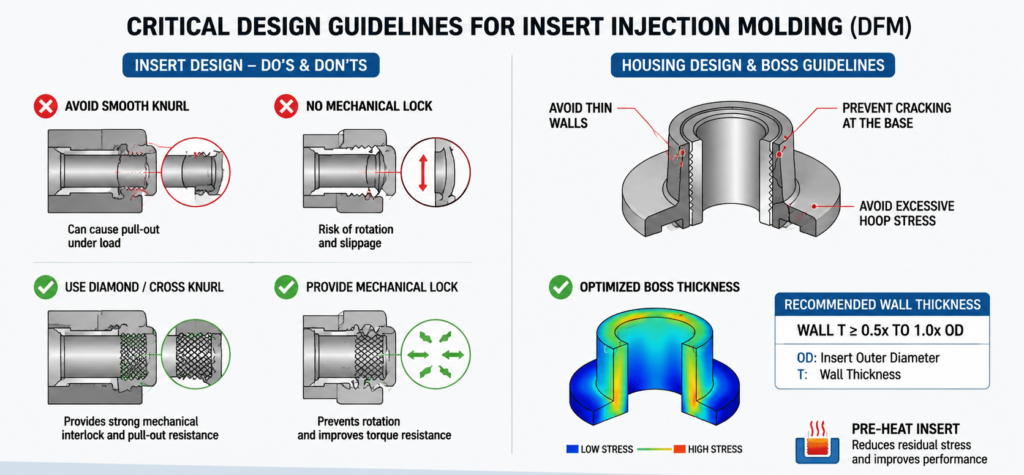
Plastic cannot securely grip a smooth metal surface on its own. To prevent rotation or pull-out under load, inserts are designed with aggressive external features such as diamond knurling or deep helical grooves. During cooling, the molten plastic flows into these textures and locks mechanically in place, forming a strong interlock that effectively transfers load from the plastic to the metal insert, improving resistance to shock and vibration.
Boss Thickness: Reducing Cracking and Hoop Stress
Differences in thermal shrinkage between metal inserts and surrounding plastic can generate significant radial stress (hoop stress). If the plastic boss wall is too thin, this stress may lead to cracking during ejection or long-term failure. To ensure stability, the boss wall thickness should be designed at 0.5x to 1.0x of the insert’s outer diameter. Pre-heating inserts before molding can also help balance cooling rates and reduce internal stress.
Insert Molding vs. Overmolding: Key Engineering Difference
Insert molding is specifically used to integrate preformed components—typically metal—into a single plastic part in one injection cycle, delivering high efficiency and structural integrity. In contrast, overmolding involves molding one material over another plastic substrate, usually in multiple steps, and is more focused on improving grip, sealing, or ergonomic performance rather than metal-to-plastic structural reinforcement.
What is Insert Molding?
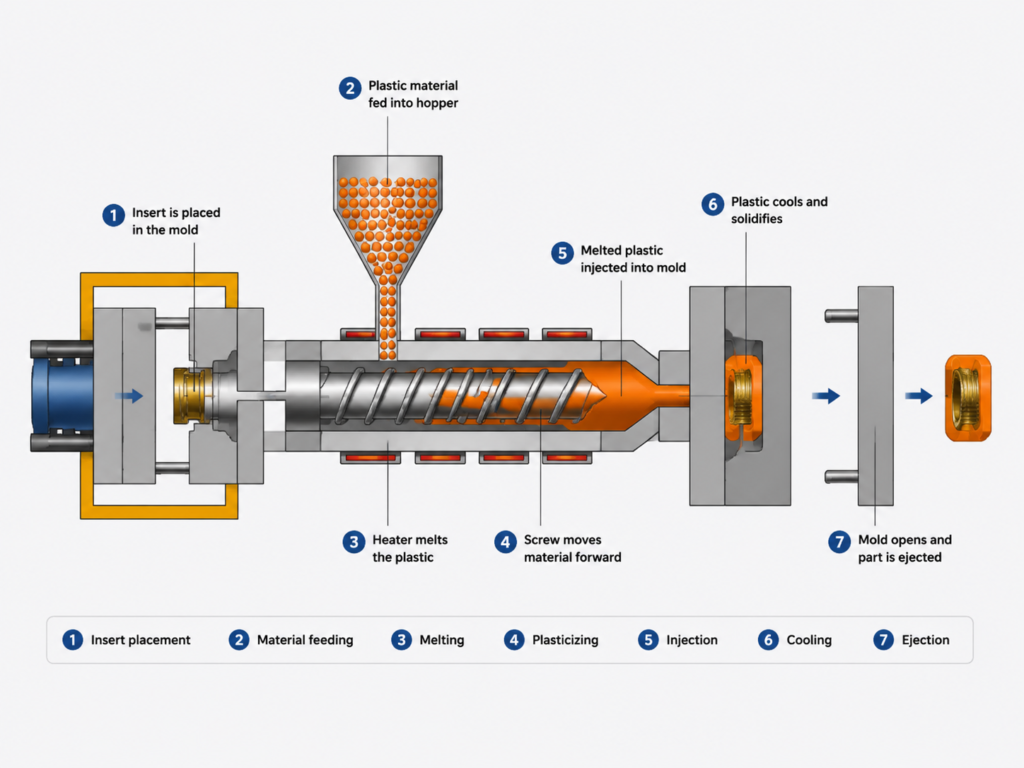
Insert molding is a manufacturing process in which a preformed component—typically metal—is placed into a mold cavity before thermoplastic resin is injected. During the molding cycle, the plastic flows around the insert, bonding and encapsulating it to form a single integrated part with enhanced structural and functional performance.
Once the injection process is completed and the part has cooled, the finished components are automatically ejected, inspected, and packaged for shipment. This efficient single-step process reduces assembly requirements, shortens production time, and ensures consistent quality for high-volume manufacturing applications.
Common Insert Types & Their Cost Impacts
| Insert Type | Primary Application | Design Consideration | Cost Impact / RapidDirect Advantage |
|---|---|---|---|
| Blind Threaded Inserts | Enclosures, waterproof housings, PCB standoffs | Prevents molten plastic from entering the thread core during high-pressure injection. | Low. Sourced in bulk brass or robotic loading ensures 0% thread contamination. |
| Through-Hole Inserts | Structural brackets, aerospace mounts, load-bearing joints | Requires precise mold shut-offs on both sides to prevent plastic flashing. | Medium. Micro-precision CNC molds ensure perfect shut-off sealing. |
| Knurled / Diamond Pins | Automotive connectors, high-torque rotating assemblies | Knurling must be aggressive enough to resist rotational forces (torque-out). | Low–Medium. DFM validation optimizes knurl geometry to prevent cracking during cooling. |
| Custom Stamped Contacts | Consumer electronics, medical probes, wire connectors | Delicate contacts must withstand polymer melt flow without deformation. | High. Custom robotic end-effectors ensure precise, damage-free loading. |
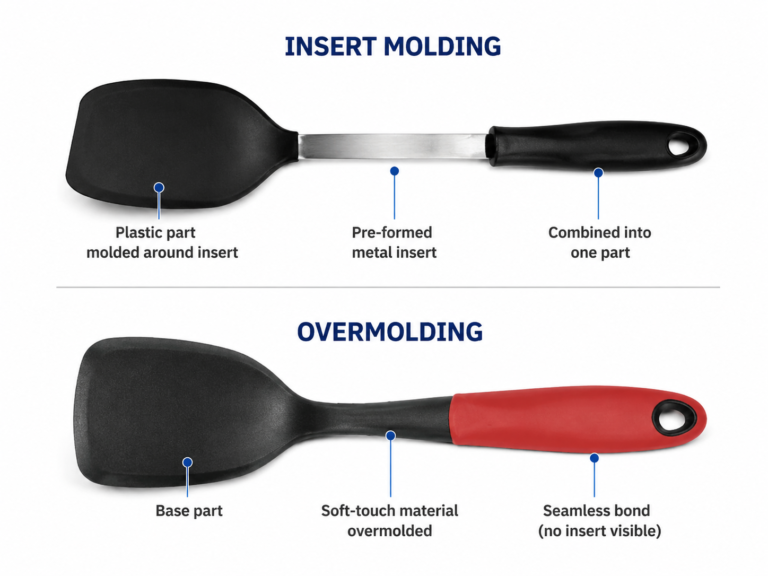
Conversely, overmolding is a two-step injection molding process in which a flexible, rubber-like thermoplastic elastomer (TPE/TPU) is molded over a rigid plastic substrate. This method is widely used to enhance product ergonomics, improve surface feel, and add functional features such as grip or cushioning.
While insert molding focuses on improving structural strength and creating durable anchoring points for fasteners, overmolding is typically specified for applications requiring ergonomic grips, vibration damping, and integrated sealing features such as water-tight bump stops.
Surface Finish
Custom parts, including injection-molded plastic components, are available with a wide range of surface finishing options to meet different functional and aesthetic requirements. These finishing solutions help improve appearance, enhance performance, and ensure compatibility with various application scenarios.
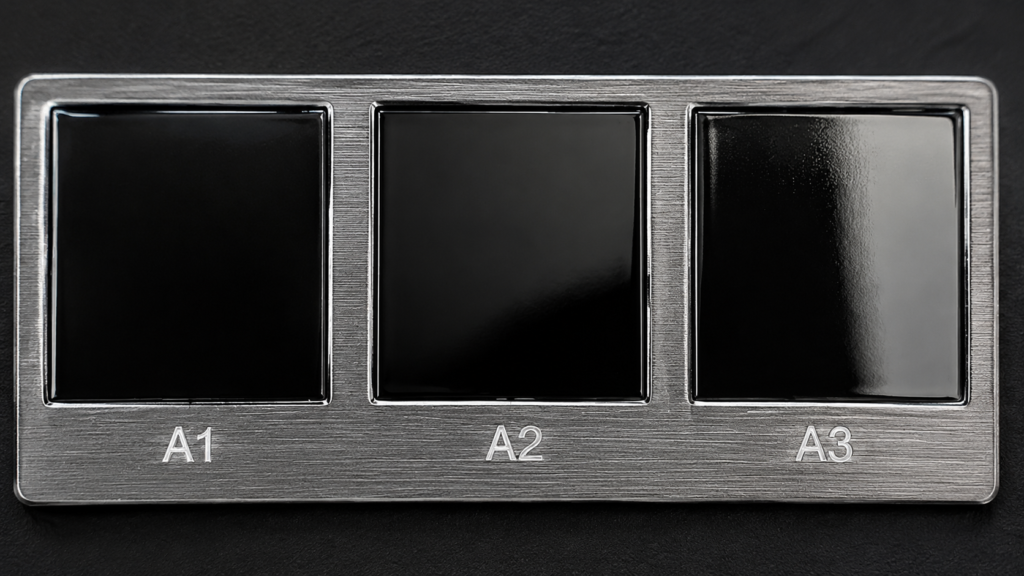
Injection-molded parts can be enhanced to a high-gloss finish through diamond buff polishing, which uses a fine abrasive compound applied to a polishing wheel and gently worked across the surface to achieve a smooth, reflective appearance. However, not all plastics are suitable for this process. Materials such as acrylic and polycarbonate (PC) can achieve excellent polishing results, while flexible polymers like TPU are difficult to finish due to their high abrasion resistance and elastic molecular structure.
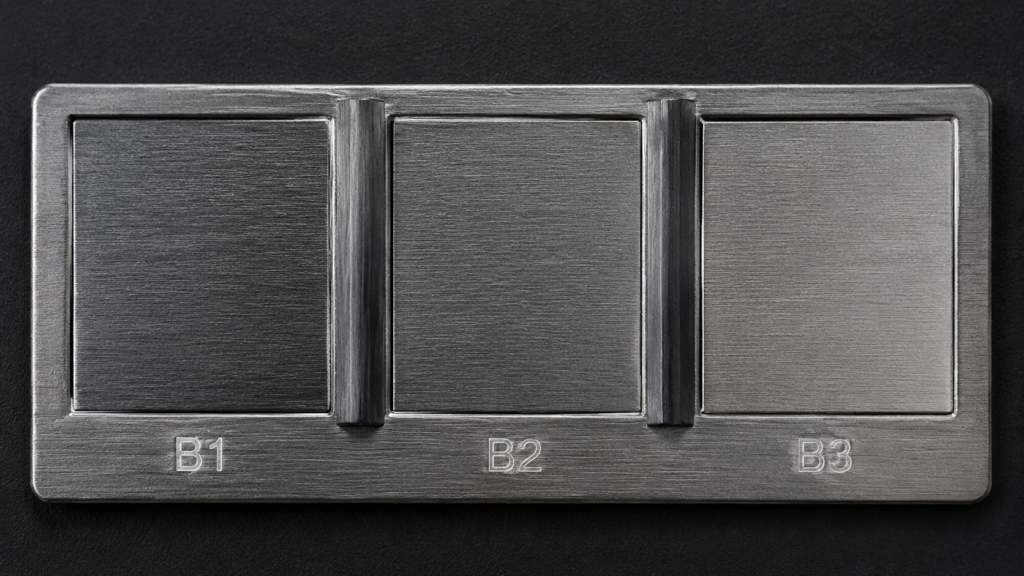
For parts requiring a moderate gloss level, a B-grade finish using grit sandpaper is an effective surface treatment method. It is compatible with a wide range of injection-molding plastics and provides a balanced surface texture that improves both appearance and cost efficiency. This process is widely used for consumer and functional products where a clean, uniform look is required without the need for high-polish finishing, while still maintaining good manufacturing flexibility.
We Work With Most Industries
Junvor supports custom insert-molded parts for medical, industrial, energy, electronics, automotive, and other OEM applications. Projects can be reviewed for insert geometry, retention features, plastic coverage, material compatibility, tooling, inspection, and assembly requirements.

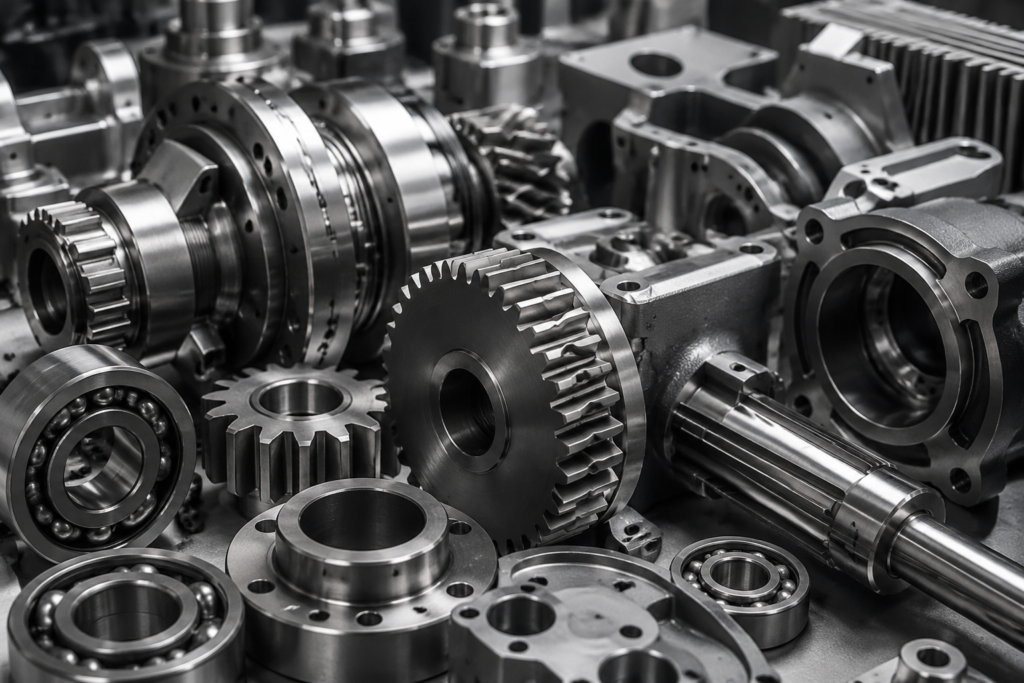



CNC Machining Design Guide
Essential Design Tips for Engineers & Buyers to Ensure Quality Machined Parts
- Design for Manufacturability (DFM)
- Tolerance & Dimensional Control
- Surface Finish Selection
- Common Design Pitfalls to Avoid
- Material & Process Optimization
- Cost & Production Efficiency Consideration